
Planning a commercial development involves far more than creating architectural drawings. Office buildings, shopping centers, hotels, healthcare facilities, and mixed-use developments require input from architects, engineers, investors, contractors, and planning authorities. When every stakeholder has a different perspective, communicating the design clearly becomes one of the biggest challenges before construction even begins.
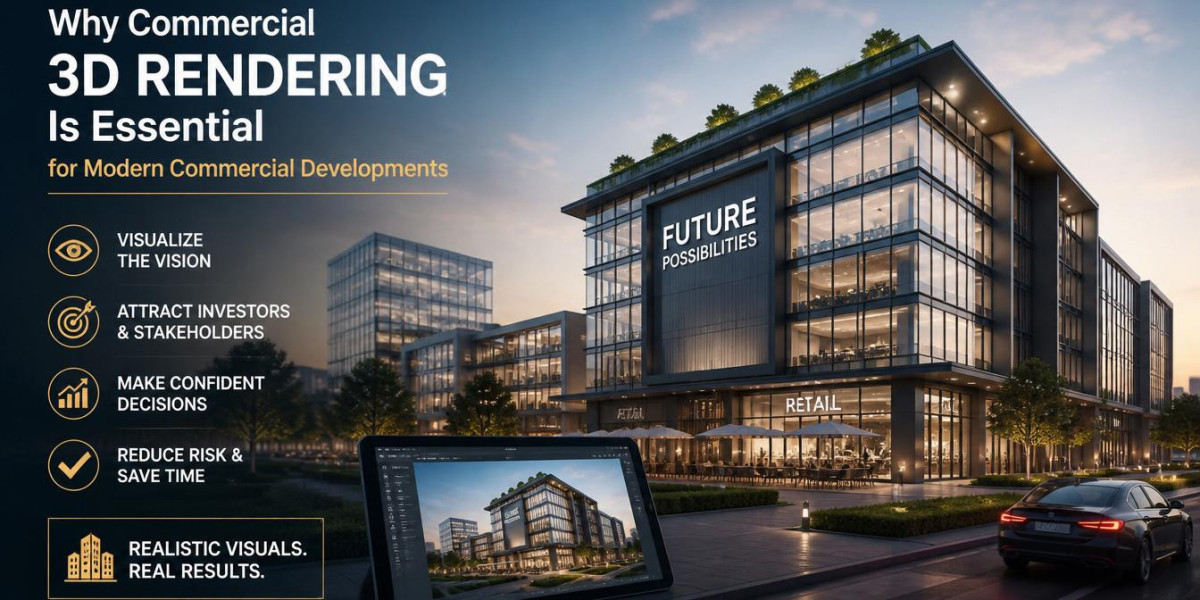
This is where Commercial 3D Rendering has become an indispensable part of modern project development. Instead of relying solely on technical plans, developers can present realistic visualizations that accurately show the finished building, surrounding landscape, materials, lighting, and architectural details. These lifelike presentations improve communication, reduce uncertainty, and help project teams make informed decisions long before construction starts.
Why Is Visualization So Important for Commercial Projects?
Commercial developments often involve significant financial investments and multiple decision-makers. Investors want confidence in the project's potential, clients need to understand the design, and approval authorities require clear presentations before granting permits.
Traditional floor plans and elevations provide technical information but rarely communicate the overall experience of a completed building. Photorealistic renderings bridge this gap by showing how the project will look in a real-world environment. This makes meetings more productive because stakeholders can discuss the design using realistic visuals rather than interpreting technical drawings.
How Does Commercial 3D Rendering Improve Project Planning?
Professional Commercial 3D Rendering allows architects and developers to evaluate design concepts before construction begins. Exterior facades, interior layouts, lighting conditions, landscaping, and surrounding infrastructure can all be reviewed in detail, helping teams identify opportunities for improvement early in the design process.
Many architecture firms and developers also rely on Commercial 3D Rendering services to create high-quality presentations for investors, marketing campaigns, planning approvals, and client meetings. These realistic visualizations improve communication while reducing the risk of misunderstandings that could lead to costly revisions during construction.
Traditional Presentations vs. Commercial 3D Rendering
Presentation Method | Stakeholder Understanding | Project Benefit |
2D Drawings | Requires technical knowledge | Basic project documentation |
Static Sketches | Limited design visualization | Early concept review |
Commercial 3D Renderings | Realistic project visualization | Better collaboration and faster approvals |
What Makes a High-Quality Commercial Rendering?
An effective rendering should represent both the technical accuracy of the design and the atmosphere of the completed development. Every visual element contributes to a stronger presentation.
Important features include:
Photorealistic materials and finishes
Accurate building proportions
Natural and artificial lighting
Detailed landscaping
Realistic environmental context
High-resolution image quality
Consistent architectural accuracy
These elements help stakeholders understand not only the building itself but also how it will function within its surroundings.
Why Does Better Communication Reduce Project Risks?
Construction delays often result from misunderstandings during the planning phase. When clients or investors cannot fully visualize the design, they may request significant revisions after important decisions have already been made.
Realistic renderings reduce this uncertainty by allowing everyone involved to evaluate the project before construction begins. Architects can explain design concepts more effectively, developers can present projects with greater confidence, and decision-makers can provide faster approvals based on a clear visual understanding of the proposal.
This collaborative approach helps reduce design changes, improves coordination, and minimizes expensive rework during construction.
How Is Commercial 3D Rendering Supporting Real Estate Marketing?
Commercial visualization is no longer used only for design reviews. It has become one of the most effective marketing tools for attracting investors, tenants, and buyers.
Developers use realistic renderings in brochures, websites, presentations, digital advertisements, and social media campaigns to showcase projects before they are built. Potential investors gain a clear understanding of the completed development, making it easier to evaluate opportunities and make informed investment decisions.
This ability to market projects during the pre-construction phase creates a significant competitive advantage in today's commercial real estate market.
Conclusion
Successful commercial developments depend on clear communication, informed decision-making, and strong project coordination. High-quality visualization enables architects, developers, investors, and clients to understand complex designs with greater clarity before construction begins. By investing in professional rendering solutions, businesses can improve collaboration, strengthen marketing efforts, and support more successful project outcomes from concept through completion.